What Is Chain Abstraction and How Does It Make Blockchain Use Easier?
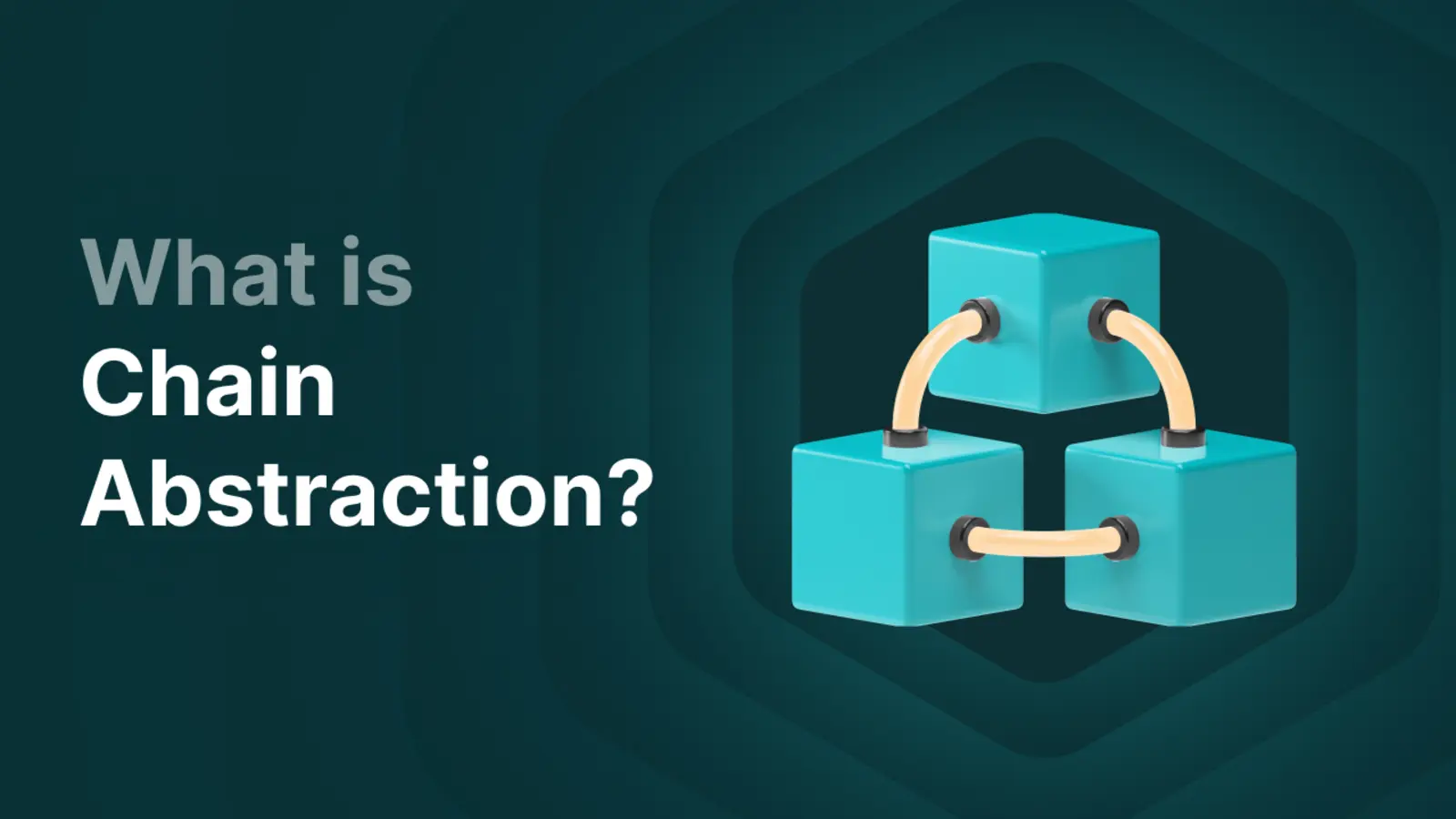
What Is Chain Abstraction?
Chain Abstraction is a way to make using multiple blockchains easier. The goal is for you to handle fewer technical steps yourself.
Normally, for example, you sometimes have to switch networks, use a bridge, or keep a separate token on multiple blockchains to pay transaction fees.
With Chain Abstraction, an app tries to handle those steps for you in the background. You mainly just say what you want to do. The app then figures out which transactions and networks are needed.
Say you have USDC on Ethereum, but you want to buy another token on Polygon. Without Chain Abstraction, you may first need to bridge your USDC from Ethereum to Polygon, switch networks, and make sure you have enough POL to pay gas fees on Polygon. With Chain Abstraction, the app can handle these steps for you in the background, if the solution being used supports that.
Chain Abstraction is not a separate protocol with one fixed set of rules. It is mainly a design goal for apps and infrastructure that want to make using multiple blockchains easier. Different projects can use different techniques for this.
Chain Abstraction is also different from account abstraction. Account abstraction is about how an account or wallet can approve and execute transactions, for example through a programmable smart account. Chain Abstraction focuses more broadly on hiding the technical differences between blockchains. Account abstraction can be part of that.
Key Takeaways
- Chain Abstraction tries to make using multiple blockchains easier.
- That means you have to switch networks or bridge tokens less often.
- An app can handle multiple steps across different blockchains in the background.
- Chain Abstraction is a design goal, not one fixed protocol.
- Account abstraction can help with that, but it is different from Chain Abstraction.
How Does Chain Abstraction Work?
With Chain Abstraction, you often mainly say what result you want to achieve. The app and the underlying infrastructure then decide which technical steps are needed.
A common approach uses so-called intents. An intent is an instruction where you specify the desired end result.
For example, you can say: "I want to convert token A to token B on blockchain X."
Then you do not have to decide for yourself which bridge, swap, or route should be used.
Next, so-called solvers can try to carry out that instruction. A solver is a party or software program that looks for a suitable route, price, and available liquidity.
Sometimes, as a user, you only have to sign one instruction. That does not mean only one transaction happens behind the scenes. Multiple transactions and messages between blockchains may still be needed.
Under the hood, such a system can combine different techniques:
- Smart accounts: programmable accounts that can, for example, bundle multiple actions.
- Paymasters: smart contracts that can pay transaction fees for a user under certain conditions.
- Relayers: parties that forward transactions or instructions.
- Cross-chain messaging: systems that pass information between different blockchains.
- Liquidity sources: places where tokens are available to carry out a swap or payment.
- Settlement contracts: smart contracts that check and settle what was ultimately executed.
ERC-7683 is an example of a draft standard for cross-chain intents. This standard gives solvers a shared interface for processing these instructions.
ERC-7683 does not automatically determine how the whole transaction is executed. Things like pricing, liquidity, and security still depend on the solution being used.
What Problems Does Chain Abstraction Solve?
The biggest problem Chain Abstraction tries to solve is fragmentation.
Your assets can be spread across different blockchains. On top of that, each blockchain can have its own rules, addresses, transaction fees, and gas tokens. That means as a user, you often need to know where your assets are and what steps are needed to use them somewhere else.
Liquidity can also be spread across multiple blockchains. An app with Chain Abstraction can try to use value on one blockchain for an action on another blockchain, without you having to figure out that route yourself.
This can also be useful for developers. Instead of building a completely separate user flow for every blockchain, they can offer certain multichain features through one integration.
Chain Abstraction does not remove the underlying technical differences, though. Bridges, messaging, solvers, and blockchains are still needed. The user just sees less of that.
What Are the Use Cases for Chain Abstraction?
Chain Abstraction can be used in different applications where multiple blockchains are involved.
One example is a cross-chain swap. You choose which token you want to exchange and on which blockchain you want to receive the new token. The infrastructure being used then handles the needed route.
Payments can also become easier. For example, an app can allow transaction fees to be sponsored or paid with another token.
Multichain crypto wallets can also show and manage addresses and assets on multiple blockchains from one place.
Within DeFi, Chain Abstraction can be used to combine liquidity or collateral from different ecosystems, if the technical infrastructure supports that.
Software agents can also use intents. For example, such an agent can adjust a portfolio or carry out a transaction within preset rules.
Clear permissions, limits, and transaction checks remain important here.
Examples of Chain Abstraction in Use
Particle Network and NEAR show two different ways Chain Abstraction can be applied.
Particle Network
Particle Network uses an account-based approach with Universal Accounts. In this setup, a user gets one address and one interaction point for actions across multiple blockchains.
These accounts are ERC-4337 smart accounts coordinated by the Particle Chain.
Within this model, liquidity can be routed between blockchains per transaction. That means value on Polygon, for example, can be used for an action on Optimism without you having to put that route together yourself.
NEAR
NEAR uses Chain Signatures, among other things. This lets NEAR accounts and smart contracts use an MPC network to sign transactions on other blockchains.
MPC stands for Multi-Party Computation. In this setup, multiple participants carry out cryptographic tasks together, without one participant having to hold all the key data.
NEAR Intents uses a different approach. Here, you state the result you want to achieve. Market makers or solvers can then try to carry out that instruction.
A verifier contract checks the signed intents and can execute a swap if the agreed conditions are met.
So Particle Network and NEAR approach Chain Abstraction in different ways. They use different technical components and can support different blockchains and forms of settlement.
What Is the Role of Wallets and Protocols in Chain Abstraction?
The crypto wallet is usually the part you see as a user. That is where you approve instructions and see which assets you own.
The actual execution work can then be handled by different protocols and infrastructure layers.
Smart accounts can give a wallet extra features. Think of custom rules for approving transactions, executing multiple actions at once, and other ways to pay transaction fees.
With ERC-4337, UserOperations, bundlers, and an EntryPoint contract all play a role.
You can think of a UserOperation as a proposed action from a user. A bundler collects these actions and sends them on for execution. The EntryPoint contract then checks whether they can be executed according to the set rules.
Paymasters can pay transaction fees under certain conditions. This allows an app to sponsor gas fees or let a user pay with certain tokens.
With NEAR Chain Signatures, key data is distributed across an MPC validator network. That makes it possible to control addresses on other blockchains from the same environment.
A simple interface does not mean you can pay less attention. You are still giving permission for actions that can have effects across multiple blockchains.
So check what you are authorizing, which costs apply, and what happens if execution fails.
What Are the Benefits and Limitations of Chain Abstraction?
Chain Abstraction can make using multiple blockchains a lot easier, but that user-friendly layer also brings new dependencies and risks. That is why it is important to look at both the benefits and the limitations.
What Are the Benefits of Chain Abstraction?
The biggest benefit is ease of use. Different technical steps can be combined into one clear user action.
Intent systems can also let multiple solvers compete to carry out the same instruction. In theory, that can lead to a better price or better execution. Whether that actually happens in practice depends on the solution being used and the available liquidity.
Account abstraction can add extra features, such as sponsored transactions, paying gas with other tokens, bundling multiple transactions, and custom recovery or validation rules.
What Are the Downsides and Limitations of Chain Abstraction?
A Chain Abstraction solution can depend on many different components, such as smart contracts, bundlers, paymasters, relayers, solvers, messaging layers, liquidity providers, and MPC participants.
The more components are needed, the more places there are where something can go wrong.
For example, ERC-7683 does not handle the security of a full intent protocol. That still depends on the solvers, settlement contracts, assets, and other systems involved in execution.
There are also risks with ERC-4337. Think, for example, of malicious paymasters and problems with the storage layout of upgradeable smart accounts.
Costs do not disappear automatically either. Gas fees, solver margins, bridge costs, settlement costs, and protocol fees can still exist.
Sometimes an app pays those costs for you. In other cases, you pay them yourself, but they are less visible in the user interface.
A simple interface can therefore hide important details. So always check the route, costs, slippage, authorizations, and what happens if a transaction cannot be executed.
Slippage is the difference between the price you expect and the price you actually get.
Conclusion
Chain Abstraction tries to make using multiple blockchains easier. Instead of having to switch networks, bridge tokens, and manage different gas tokens yourself every time, you more often just say what result you want to achieve.
The app and underlying infrastructure can then carry out different steps in the background. Think of finding liquidity, sending transactions, and handling actions across multiple blockchains.
That can create a simpler user experience, especially for swaps, payments, and multichain crypto wallets.
The technology behind such a simple interface is still complex, though. Chain Abstraction can depend on smart contracts, solvers, bridges, messaging layers, paymasters, and other components.
A simple interface does not mean costs and risks disappear. So keep checking what you sign, which costs apply, and how an app carries out your instruction.