What is a block reward and how does it work within a blockchain?
What is a block reward?
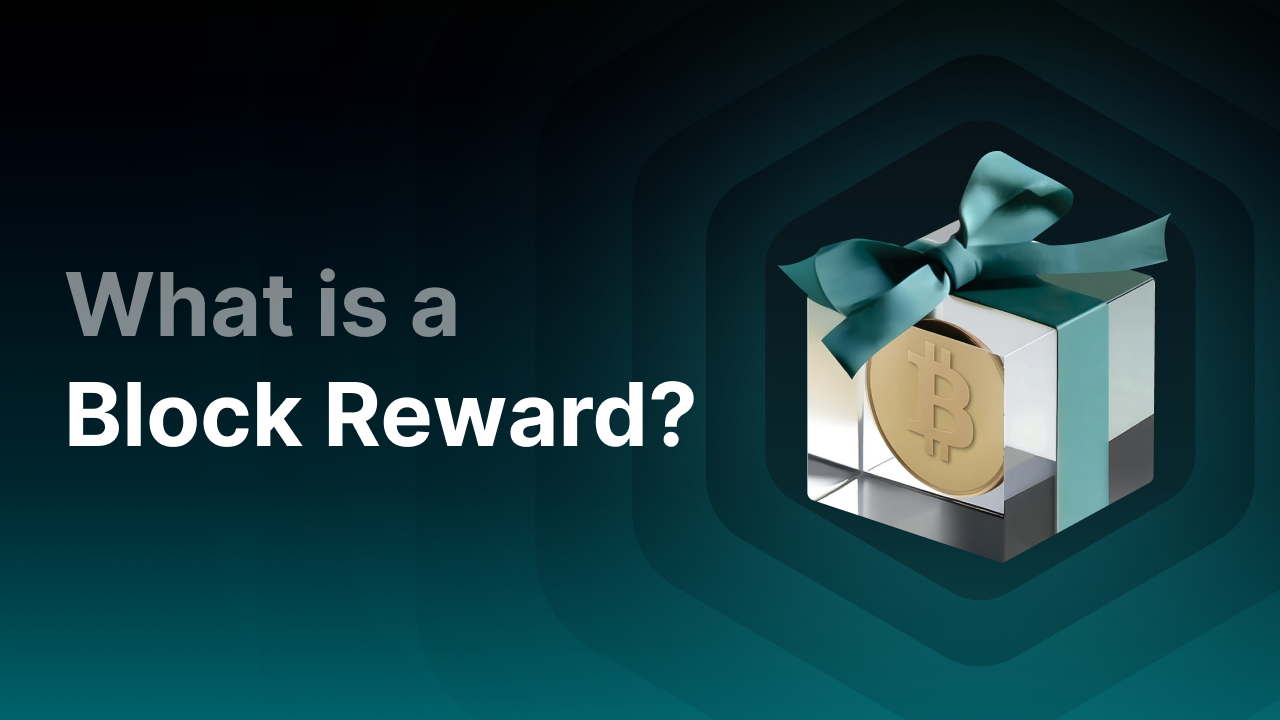
A block reward is the reward a miner receives when successfully adding a new block to a blockchain. It is an important part of the Proof-of-Work consensus algorithm used by crypto networks such as Bitcoin. This system ensures that transactions on the network are processed and that the network remains secure. Through block rewards within the Proof-of-Work system, new coins are also brought into circulation.
Block rewards form the financial incentive that motivates miners to secure the network. Miners invest in computer hardware and use computing power and energy to secure and maintain a blockchain. As a result, block rewards play a crucial role not only in the network’s technology, but also in the economic stability of cryptocurrencies.
Key Takeaways
- A block reward is the reward miners receive for adding a new block and forms the core of the security and operation of Proof-of-Work blockchains.
- Block rewards ensure the issuance of new coins, encourage participation in the network, and contribute to blockchain security.
- In Proof-of-Work, miners compete to solve cryptographic puzzles, while in Proof-of-Stake validators receive rewards through staking.
- A block reward usually consists of newly created coins and transaction fees, with transaction fees becoming more important over time.
- In Bitcoin, the block reward decreases through fixed halvings, leading to scarcity and eventual full reliance on transaction fees.
What is the role of block rewards?
Block rewards fulfill several roles at the same time. They ensure a fair distribution of new coins, encourage network participation, and contribute to blockchain security. The higher the reward, the more attractive it is for parties to participate, making the network more robust.
In addition, block rewards influence the inflation of a cryptocurrency. By predefining how many coins are issued per block and how this reward decreases over time, unlimited issuance of new coins is prevented.
How do you receive block rewards?
Cryptocurrencies operate based on blockchain technology. Every crypto has a blockchain consisting of a chain of blocks, with each block containing information about transactions. To add a new block, consensus must be reached among the nodes on the network.
In Proof-of-Work blockchains such as Bitcoin and Litecoin, miners compete with each other to solve cryptographic puzzles. This process requires a lot of computing power and energy. The first miner or mining pool to find the correct hash is allowed to add the new block to the blockchain and receives the block reward.
Many altcoins use the Proof-of-Stake consensus mechanism instead of Proof-of-Work and therefore do not use mining. Instead, validators lock up crypto through staking. Based on the collateral they stake, validators are selected to validate blocks. When they do so correctly, they receive a staking reward. This reward serves the same purpose as a block reward in mining, but works differently from a technical perspective.
What does a block reward consist of?
A block reward usually consists of two components. The first component is newly created cryptocurrency or tokens. This is how new coins are brought into circulation and is an important part of a blockchain’s tokenomics.
The second component consists of transaction fees, also known as network fees. Every transaction on a blockchain incurs fees, which are paid to the miner who validates the transactions and includes them in a block. Users can often choose to pay higher transaction fees so their transaction is processed faster. The level of these fees is influenced by network congestion and the available space in a block (the block size), which determines how many transactions can be processed at the same time.
In the early stages of a blockchain, block rewards are often high and mostly consist of newly issued coins. As the network grows, block rewards decrease, for example through halvings, while the share of transaction fees increases.
The Bitcoin block reward
Bitcoin is the first blockchain to use block rewards. The network was launched in 2009 by Satoshi Nakamoto, who described in the Bitcoin whitepaper how a decentralized payment system without a central authority could function. In this design, the block reward plays a central role. At the launch of the network, the block reward was 50 BTC per block.
Bitcoin’s monetary policy strictly defines that the block reward is halved every 210,000 blocks. This event is known as the Bitcoin halving and occurs roughly every four years. Due to these halvings, the block reward has systematically decreased over the years from 50 BTC to 3.125 BTC.
In this way, digital scarcity is created, a characteristic that many investors find attractive. In total, no more than 21 million Bitcoins will ever exist. As the block reward continues to decrease, fewer new Bitcoins enter circulation. This gives the Bitcoin network a strong deflationary character and aligns with the vision Satoshi Nakamoto described in the whitepaper.
In the distant future, Bitcoin’s block reward will eventually reach zero. From that moment on, miners will be fully dependent on transaction fees to secure the network.
Block rewards of altcoins
Although Bitcoin is often used as the example when discussing block rewards, many other cryptocurrencies use a similar reward mechanism. Each blockchain has its own economic design and reward structure. The goal of block rewards is almost always the same: to incentivize participants to secure the network and process transactions. However, the way this is implemented differs per blockchain.
In many Proof-of-Work blockchains such as Litecoin and Dogecoin, the system resembles that of Bitcoin. Miners receive a block reward for adding a new block, supplemented by transaction fees. The differences mainly lie in block time, the size of the block reward, and the rate at which it decreases. For example, Litecoin has a shorter block time than Bitcoin and also uses periodic halvings. Dogecoin, on the other hand, was designed with a fixed block reward and has no maximum total supply.
There are also networks that choose a different model. Some blockchains do not reduce their block rewards through fixed halvings, but through a gradual reduction per block or per year. This results in a predictable, less abrupt decline in new coins and helps limit inflation as the network matures.
Final thoughts
Block rewards are a fundamental part of the economic and technical design of blockchains, as they financially incentivize participants to process transactions and secure the network. By setting predefined rules for the size and reduction of block rewards, not only is network security ensured, but cryptocurrency inflation is also controlled. While the exact implementation differs per blockchain, the underlying goal remains the same: creating a sustainable, secure, and decentralized system that can operate without a central authority.