What are LP tokens and what can you do with them?
What are LP tokens?
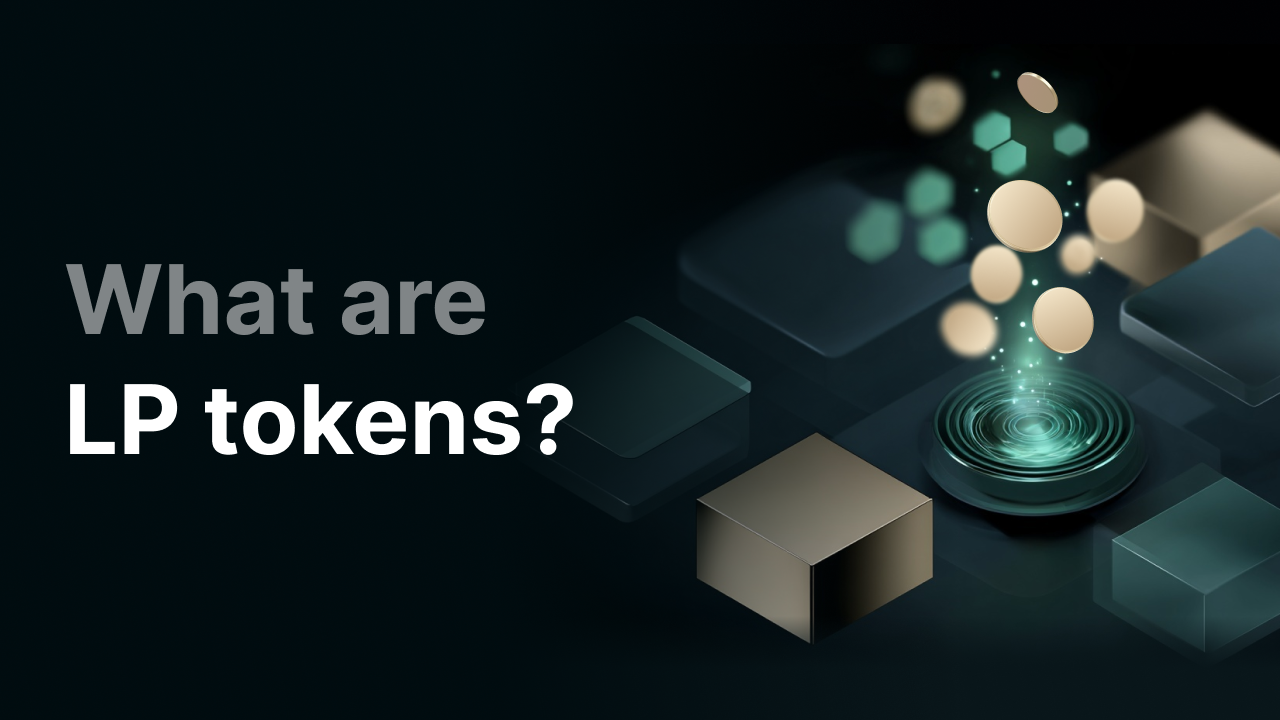
Liquidity Provider tokens (LP tokens) are crypto tokens that are issued to users of a network when they provide liquidity to a decentralized exchange (DEX) or a DeFi protocol. This process is also referred to as liquidity mining. Users do this by depositing one or more cryptocurrencies into a liquidity pool. Within liquidity pools, tokens of trading pairs are collected (such as ETH/USDC), enabling decentralized trading between two parties without the involvement of a third party, and between two or more different assets.
The liquidity provider receives LP tokens as a reward, which are issued by the protocol or the associated smart contract. LP tokens represent both the right to the deposited tokens and the right to a share of the transaction fees generated by the pool. This process takes place fully transparently on-chain on the blockchain, thanks to programmable smart contracts.
Example: You deposit ETH and USDC into the ETH/USDC liquidity pool on Uniswap and receive LP tokens that represent your proportional share of the pool. In practice, these LP tokens appear in your wallet as, for example, 5 UNI-V2 ETH/USDC, which corresponds to, for example, 0.5% of the total liquidity pool (depending on the total pool size). This share determines which portion of the transaction fees (for example, 0.3% per transaction) you receive, which are paid out in the underlying assets of the pool, namely ETH and USDC, when you redeem the LP tokens.
Key Takeaways
- LP tokens (Liquidity Provider tokens) are crypto tokens issued by DeFi protocols to users who provide liquidity to liquidity pools on decentralized exchanges (DEXs).
- By depositing two or more assets into a liquidity pool, users receive LP tokens that represent their proportional share of the pool, including the right to a portion of the transaction fees.
- LP tokens function within automated market makers (AMMs), which enable trading without a traditional order book by determining prices based on algorithms and pool balances.
- Providing liquidity forms the foundation of many DeFi applications and is often grouped under the broader term yield farming in practice, although it can technically be a separate strategy.
- The use of LP tokens offers benefits such as passive income, interoperability, and efficient market mechanisms, but also involves risks, including impermanent loss, smart contract risks, and market risks.
How do LP tokens work?
LP tokens operate within Automated Market Makers (AMMs), a mechanism in which trading does not take place via a traditional order book, but through liquidity pools. Instead of directly matching buyers and sellers (peer-to-peer), AMMs use mathematical formulas to determine prices based on supply and demand within the pool. Users typically provide an equal value of two tokens (for example, ETH and UNI) to a pool to supply liquidity.
Liquidity pools operate via smart contracts and the process works as follows:
- The user locks one or more tokens into the liquidity pool via a DEX or DeFi protocol.
- The pool calculates the user’s proportional share relative to the total pool.
- The protocol mints the LP tokens and assigns them to the liquidity provider.
When users of the DEX or DeFi protocol perform token swaps via the liquidity pool, they pay transaction fees to the protocol. These transaction fees are automatically and proportionally distributed to the liquidity providers.
Once a user withdraws liquidity from the pool, the corresponding LP tokens are burned, meaning they are removed from circulation. At the same time, the user receives the deposited tokens back, along with the accumulated transaction fees.
What can you do with LP tokens?
LP tokens are multifunctional and can be used in various ways within the DeFi ecosystem. While the underlying assets remain locked in the liquidity pool, the LP tokens themselves can be used independently:
- Withdraw liquidity: LP tokens can be redeemed for the underlying assets.
- Yield farming: To generate additional income, LP tokens can be staked via smart contracts within other DeFi protocols. This allows users to earn additional rewards on top of transaction fees. An important detail is that providing liquidity (also referred to as liquidity mining) is often considered a form of yield farming in practice.
- Collateral: Some platforms accept LP tokens as collateral for loans.
- Governance: In certain protocols, LP tokens grant voting rights over protocol decisions.
As a result, LP tokens function not only as proof of ownership, but also as productive financial assets.
Platforms that use LP tokens
LP tokens play an important role across various DeFi platforms on major blockchains, such as Ethereum, Solana, and the BNB Smart Chain (BSC). Well-known DeFi platforms that use LP tokens include:
- Uniswap: Uniswap is one of the first and largest AMM DEXs on Ethereum. The protocol uses LP tokens to represent the share of liquidity providers in liquidity pools. The protocol’s native token is UNI, which is primarily used for governance and incentive mechanisms.
- SushiSwap: SushiSwap is, like Uniswap, an AMM DEX on Ethereum and originally emerged as a fork of Uniswap. The protocol distinguishes itself through additional incentive mechanisms, such as rewards in the form of the SUSHI token for staking LP tokens.
- Curve Finance: Curve Finance operates primarily on Ethereum, but is now also active on other blockchains. The protocol specializes in liquidity pools for stablecoins and other low-volatility assets, which helps limit price deviations and impermanent loss.
- PancakeSwap: PancakeSwap is an AMM DEX on the BNB Smart Chain and is often seen as the equivalent of Uniswap within this ecosystem. The platform offers similar functionality, such as token swaps and liquidity pools, and is one of the most widely used DeFi protocols on this network.
- Orca: Orca is an AMM DEX on the Solana blockchain and focuses on trading SPL tokens. The protocol is known for its user-friendly interface and efficient liquidity pools.
Advantages of LP tokens
LP tokens offer users several advantages within the DeFi ecosystem:
- The ability to earn additional income by receiving transaction fees.
- Within the decentralized world of DeFi, it is possible to trade crypto without the involvement of a third party and often with a relatively low initial investment thanks to liquidity pools.
- Thanks to the ability to re-stake LP tokens, additional income can be generated through yield farming strategies.
- Interoperability within the broader DeFi ecosystem makes it possible to use LP tokens across different protocols.
- Liquidity pools combined with AMMs enable trading without reliance on order books, which is essential for well-functioning decentralized markets.
Disadvantages of LP tokens
LP tokens also come with various risks and disadvantages:
- Holding LP tokens involves the risk of impermanent loss due to price fluctuations between paired tokens.
- Locking tokens, issuing LP tokens, and distributing rewards all take place via smart contracts, which introduces risks related to bugs, exploits, and protocol errors.
- Strong volatility of the underlying assets, particularly with smaller altcoins, creates increased market risk while tokens are locked in the pool.
- The process of liquidity mining and yield farming can be complex, which may lead to misuse by inexperienced users.
Final thoughts
LP tokens form a fundamental component of the DeFi ecosystem and play a crucial role in the functioning of decentralized exchanges and automated market makers. By providing liquidity to liquidity pools, users receive LP tokens that represent their proportional share of the pool and entitle them to transaction fees and other returns.
The way LP tokens work enables efficient, decentralized trading without reliance on traditional order books or centralized intermediaries. At the same time, LP tokens offer flexibility by being usable across multiple DeFi protocols, for example for yield farming, as collateral, or for governance purposes. As a result, LP tokens function not only as proof of ownership, but also as productive financial instruments within a broader ecosystem.
However, there are also clear risks, such as impermanent loss, smart contract vulnerabilities, and exposure to market volatility. This highlights the importance of a solid understanding of the underlying mechanisms and a careful assessment of risks before providing liquidity. Overall, LP tokens illustrate both the opportunities and the complexity of decentralized finance and underscore the need for knowledge, transparency, and responsible use within DeFi.